
First seizure: what happens next
The workup usually needed, medication decisions, and practical issues worth discussing.
Author: NeuroBali clinical team
Reviewed by the NeuroBali clinical team
Key points
- A first seizure should be assessed to confirm whether it was truly epileptic or a mimic.
- Witness information often determines the direction of evaluation.
- Long-term medication decisions depend on recurrence risk and patient context.
Articles are not a substitute for consultation.
If symptoms are new, severe, sudden, or worsening, use articles only as orientation and contact the clinic team for guidance.
Not every episode is epilepsy
Fainting, heart rhythm problems, low blood sugar, medication effects, sleep disorders, panic attacks, or psychogenic events can resemble seizures. Clinicians usually begin with a detailed timeline before concluding the diagnosis. An epilepsy label should not be given from one brief story alone, especially when there is no witness or recording.
Important questions include activity before the event, aura, eye position, body movements, lip color, duration, confusion afterward, tongue injury, urine loss, and recovery pattern. Witness information is valuable because the patient often cannot remember the episode. If events recur, a short video taken safely can help the evaluation.
Tests that may be needed
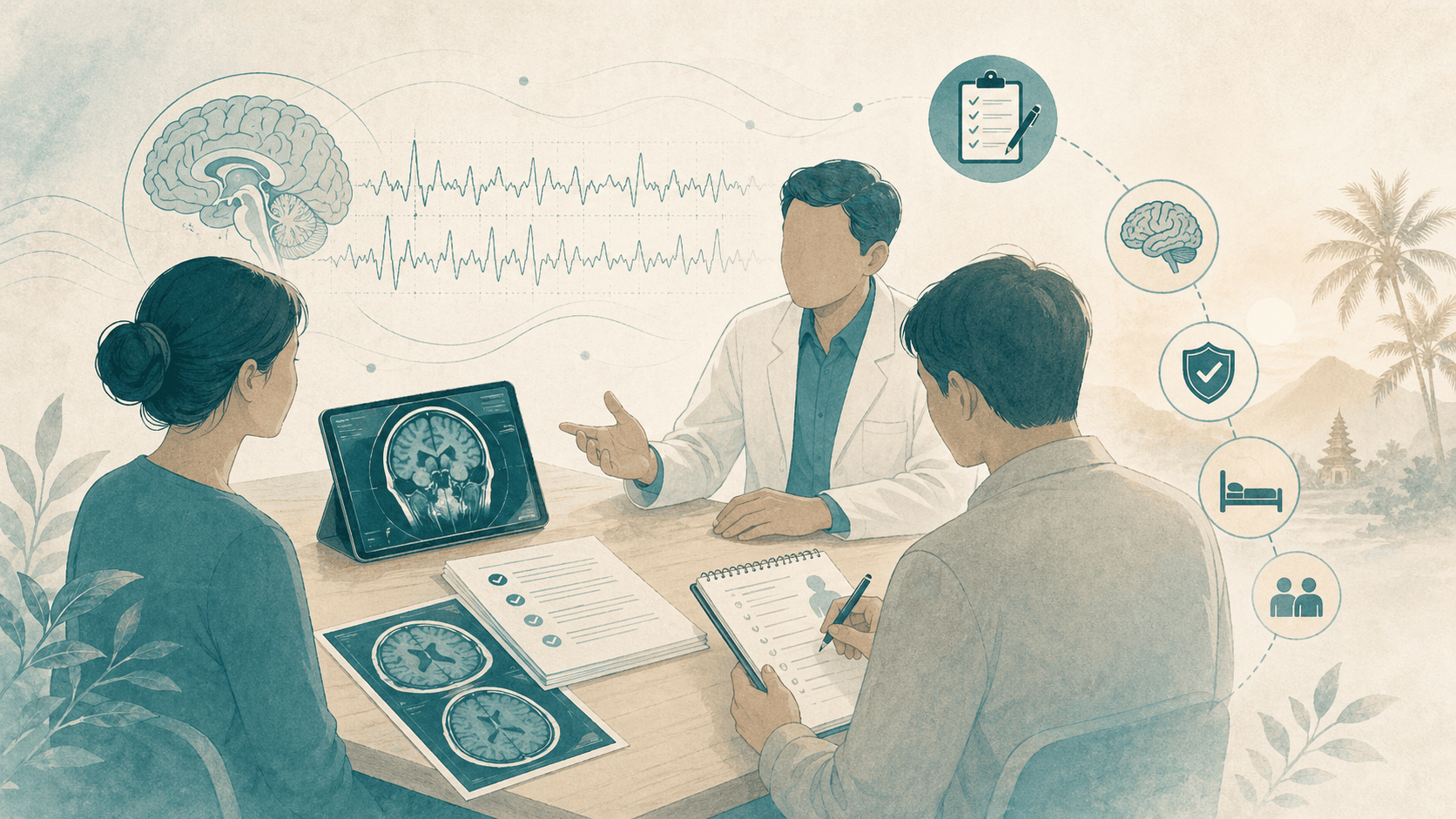
Evaluation may include EEG, brain imaging, blood tests, and review of medication, supplements, alcohol, or other substances. EEG helps look for certain electrical patterns, but a normal EEG does not always exclude epilepsy. Conversely, EEG findings must be interpreted with the clinical story so they do not create an overconfident conclusion.
Brain imaging is considered when focal signs, injury, age factors, unprovoked seizure, neurological change, or structural concerns are present. Blood tests may assess glucose, electrolytes, organ function, infection, or other factors depending on context. Tests are chosen based on the clinical story, not automatically for everyone.
Safety while awaiting evaluation
Until evaluation is complete, discuss driving, swimming, heights, machinery, cooking alone, bathing in a tub, and other activities that become dangerous if awareness suddenly changes. Driving rules can differ by location and event type, so decisions should be discussed directly with a doctor who understands the patient's context.
Family can help by keeping the area safe, turning the person onto the side after movements stop when possible, not putting objects in the mouth, not forcibly holding the body down, and timing the episode. A seizure lasting more than five minutes, repeated seizures without recovery, major injury, pregnancy, diabetes, or an event in water requires urgent help.
After the initial phase, patients usually need a clear follow-up plan: when to return, which tests are pending, whether temporary activity restrictions apply, and who to contact if another event occurs. A written plan helps families stay calmer and reduces rushed decisions driven by fear. Do not start or stop anti-seizure medicine without medical instruction.
Need clinical guidance?
Send your main symptom, duration, and recent test results if available. The clinic team will help decide the next step.
WhatsApp