
Tremor: not all tremor is Parkinson's
The tremor patterns clinicians look for, limits of remote consultation, and what to bring.
Author: NeuroBali clinical team
Reviewed by the NeuroBali clinical team
Key points
- Tremor has many causes; Parkinson's disease is only one of them.
- Whether tremor appears at rest, with posture, or with action helps diagnosis.
- Videos of daily activities are often very helpful during consultation.
Articles are not a substitute for consultation.
If symptoms are new, severe, sudden, or worsening, use articles only as orientation and contact the clinic team for guidance.
Patterns clinicians look for
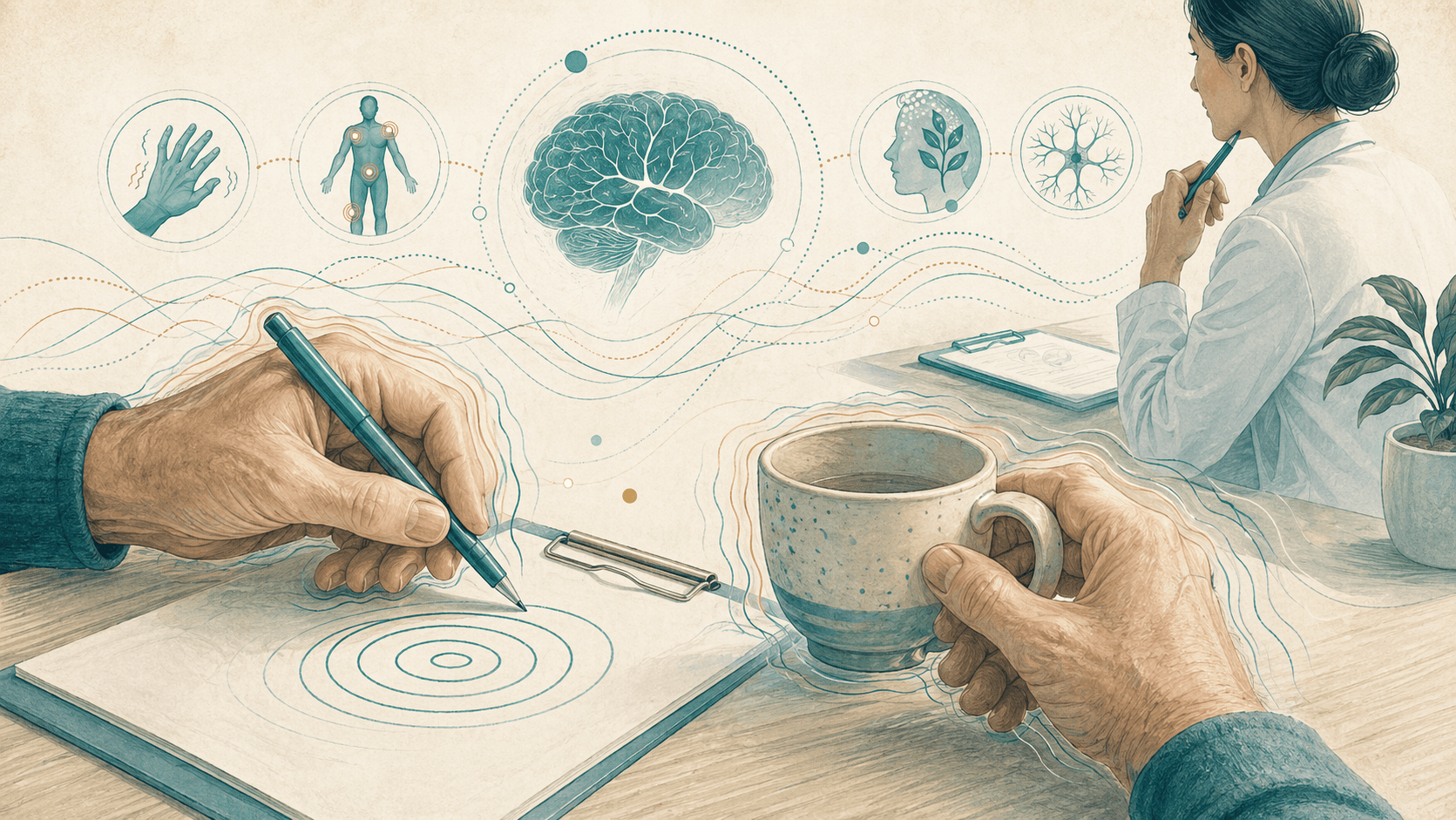
Clinicians observe whether tremor appears when the hand is resting, when the arm is outstretched, while writing, holding a cup, or approaching a target. This pattern helps distinguish essential tremor, parkinsonian tremor, dystonia, medication effects, thyroid disease, anxiety, and other causes. Tremor location, right-left symmetry, rhythm, and triggering situations are also assessed.
Tremor is also assessed with other signs: slowness, stiffness, gait change, balance, facial expression, smaller handwriting, sleep disturbance, constipation, smell change, or voice change. Parkinson's disease is not just tremor, and tremor alone is not enough to conclude the diagnosis. Direct examination remains important, especially when symptoms are new or progressive.
What to bring to consultation
Bring a medication list, supplements, daily caffeine use, family history, and when tremor is most disruptive. Some asthma medicines, psychiatric medicines, nausea medicines, stimulants, or dose changes can affect tremor. Short videos of writing, eating, holding a cup, buttoning clothes, using a phone, and walking are often more informative than verbal description.
If tremor changes with stress, sleep deprivation, certain medicines, timing after coffee, or being observed by others, record the pattern. This helps clinicians decide whether labs, imaging, medication adjustment, occupational therapy, or observation is needed. Also write down the impact: eating, work, prayer, hobbies, or confidence.
Tremor is not one diagnosis
Some mild tremors can be monitored, some improve when triggers are reduced, and some need treatment. Treatment choice depends on cause, symptom severity, work, daily activities, age, other illnesses, and side-effect risk. Treatment goals also need to be realistic: sometimes the aim is not to remove tremor completely, but to make hand function more comfortable.
Seek urgent help when tremor appears suddenly with one-sided weakness, slurred speech, facial droop, severe headache, confusion, fever, neck stiffness, or walking difficulty. That pattern does not fit ordinary chronic tremor and should be assessed as a possible acute condition. For slowly developing tremor, a planned consultation helps clarify diagnosis and care options.
Patients should also know that observation does not mean the concern is ignored. With mild tremor, the doctor may monitor the pattern, review medication, suggest habit adjustments, or request additional videos before starting treatment. A stepwise approach helps avoid unnecessary medication while still protecting daily function.
Need clinical guidance?
Send your main symptom, duration, and recent test results if available. The clinic team will help decide the next step.
WhatsApp